


Why Spring Allergies Can Make Breathing Harder
Why Spring Allergies Can Make Breathing Harder For many people in the Northern Hemisphere, spring is a welcome change. The days get longer, the weather
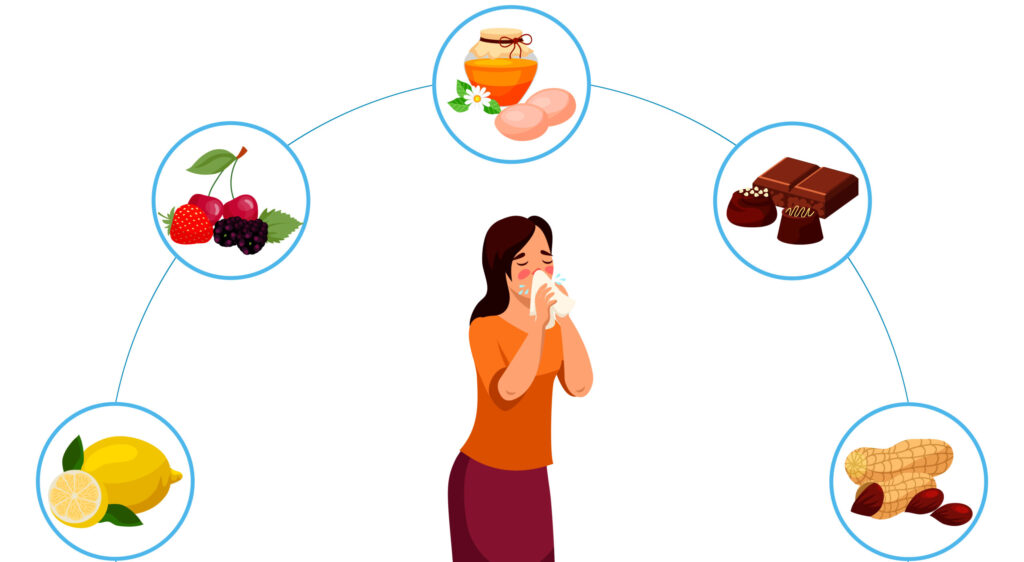
Many people ask the question “How can eating something cause me to have an asthma attack in my lungs”?
The answer is simple, but to understand this question, you first must gain an understanding of what asthma is. It is also essential to understand how asthma is developed and the difference between normal respiratory defence mechanisms for fighting foreign particle attacks in the lungs in comparison to what happens in an asthma attack.
Unlike other respiratory conditions like cystic fibrosis, COPD and Bronchiectasis, asthma is actually a hypersensitivity condition. An asthma attack is actually an immune response to enzymes, proteins and anti-enzymes released by a parasite or an antigen.
As a part of the body’s immune response in an asthma attack, apart from the standard respiratory responses of inflammation and excess secretion of mucus, the body also releases a number of immune chemicals including immunoglobulin E or IgE (among others).
The release of IgE induces constriction of the smooth muscles around the outside of the airways, also known as Bronchoconstriction. This constricts the airways more and works towards helping to amplify the cough mechanism and expel the parasite from the lungs.
We have similar defence systems (called mucociliary escalators) in other parts of our bodies, including the large and small intestines of our digestive system. All of these systems are connected through our circulatory system where the immune system works its magic. Let me explain this further and how it all works.
Because it is all connected by the circulatory system, when enzymes from allergens or secretion from a parasite, or chemicals in preservatives, additives, etc. similar to these enzymes reach the walls of the large intestines or small intestines, this stimulates an immune response similar to an asthma attack and can also induce an asthma attack through the circulatory system.
Without going into too much detail, it is believed that asthma is usually developed from the first exposure to a specific parasitic attack and how the adaptive immune system combats this type of invasion.
The adaptive immune system is the part of our defence system which reacts to new infections or attacks from foreign particles, bacteria, viruses, parasites, and more.
When our body is attacked for the first time from a new infection, the adaptive immune system can take between 4–7 days to become activated against the infection or attack. Once activated, these cells produce memory cells so that they can respond more quickly to future infections or attacks of the same type.
When a parasite or allergen attacks the host, it secretes a fluid (proteins, enzymes and antienzymes) which break down the bond between the skin cells (called the epithelium) so that the parasite can gain access to the tissue and then absorb the nutrients from the blood for feeding on.
In people without asthma, the first attack by a specific parasite (like dust mites or fungus) is usually from a large invasion. To combat this, the body performs the following three steps:
Most of the time, dust mites are removed by being trapped in the mucus and expelled via the mucociliary escalator. Symptoms usually don’t occur unless mucus builds up or can’t be cleared.
For someone who develops asthma, the first attack may come from a small number of parasites. In this case, the lungs add one more layer of defence:
Bronchoconstriction – This is where the muscles of the airways contract to assist in removing mucus and amplifying the cough mechanism.
This mechanism is only employed if secretions reach the tissue within the lungs.
The adaptive immune system develops memory cells for this defence mechanism (including Bronchoconstriction). If the body doesn’t experience further attacks for a few years, these cells may be discarded. However, repeated exposure retains them — similar to how vaccines work through boosters.
Because this defence mechanism is linked to the immune system, which works with the circulatory system, reactions can occur anywhere in the body — not just in the lungs.
It’s not only parasite secretions — chemicals in food (preservatives, additives, etc.) that mimic these enzymes can also trigger similar immune responses.
Healthy lungs and a functioning mucociliary escalator are vital, as they trap and remove up to 90% of foreign particles. If blocked, there’s a higher chance of mucus buildup and infection, which increases the likelihood of asthma attacks or other respiratory issues.
It may not even be pollen itself causing the issue, but the allergens or chemicals attached to it. These can be released in the mucociliary escalator, reach lung tissue, and trigger asthma symptoms.
I know this article was long, but I hope you found it informative and helpful in understanding why eating certain foods can lead to an asthma attack.
Why Spring Allergies Can Make Breathing Harder For many people in the Northern Hemisphere, spring is a welcome change. The days get longer, the weather
High AQI Alert: What Your Lungs Are Up Against Around the globe we’re experiencing unusual environmental conditions from 1. Extreme heat to freezing cold, 2. Snowstorms
Energy and focus often feel like things we need to chase through caffeine, supplements, or motivation. But the real foundation of both is simpler and
| Cookie | Duration | Description |
|---|---|---|
| cookielawinfo-checkbox-analytics | 11 months | This cookie is set by GDPR Cookie Consent plugin. The cookie is used to store the user consent for the cookies in the category "Analytics". |
| cookielawinfo-checkbox-functional | 11 months | The cookie is set by GDPR cookie consent to record the user consent for the cookies in the category "Functional". |
| cookielawinfo-checkbox-necessary | 11 months | This cookie is set by GDPR Cookie Consent plugin. The cookies is used to store the user consent for the cookies in the category "Necessary". |
| cookielawinfo-checkbox-others | 11 months | This cookie is set by GDPR Cookie Consent plugin. The cookie is used to store the user consent for the cookies in the category "Other. |
| cookielawinfo-checkbox-performance | 11 months | This cookie is set by GDPR Cookie Consent plugin. The cookie is used to store the user consent for the cookies in the category "Performance". |
| viewed_cookie_policy | 11 months | The cookie is set by the GDPR Cookie Consent plugin and is used to store whether or not user has consented to the use of cookies. It does not store any personal data. |